
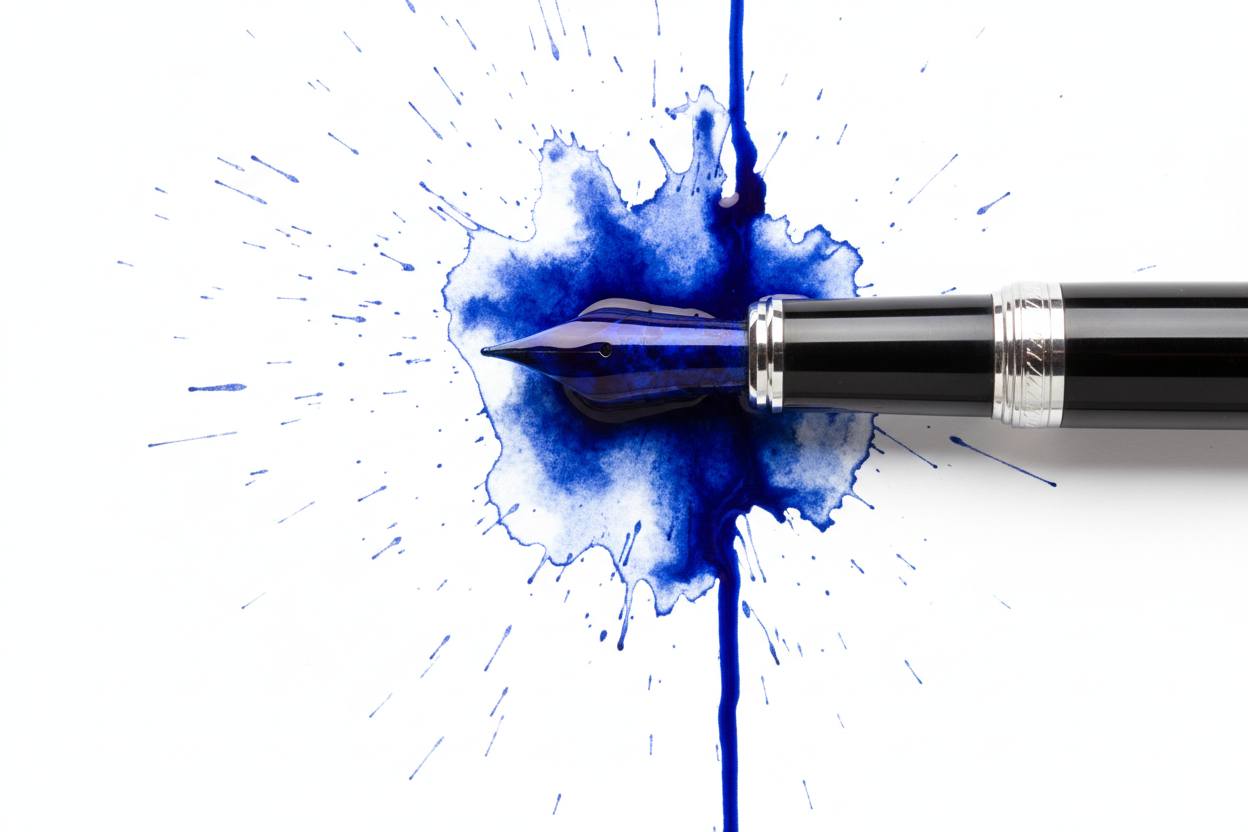
Flying with Fountain Pens: How to Avoid Airplane Leaks
If you love the ritual of fine writing, the idea of leaving your favorite bespoke fountain pen behind when you travel for business or vacation is heartbreaking. But almost every pen enthusiast has heard the classic horror story: Someone boards a flight, pulls out their pen at 35,000 feet, uncaps it, and a fountain of ink bursts out, ruining their clothes and their tray table.
It’s enough to make you want to stick a cheap plastic ballpoint in your carry-on instead.
But do fountain pens actually leak on airplanes, or is it just an old myth from a bygone era? The short answer is: they absolutely can leak if you aren't careful, but preventing it is incredibly simple once you understand the physics at play.
Here is why airplane leaks happen and how you can travel the world with your fine writing instruments completely mess-free.
The Physics: Why Do Pens Care About Altitude?
To protect your pens, you don't need a degree in aerospace engineering, just a basic understanding of air pressure.
When you sit at your desk at sea level, the air pressure inside your pen’s ink reservoir is perfectly balanced with the air pressure in the room. However, as an airplane climbs to its cruising altitude, the cabin air pressure drops significantly.
If there is a pocket of air trapped inside your pen's ink cartridge or converter, that air pocket will expand as the external cabin pressure drops.
-
The Problem: Air is highly compressible and expands rapidly. Ink, being a liquid, does not compress or expand.
-
The Result: The expanding air pocket has to go somewhere. It expands downward, acting like a tiny piston that forcefully pushes the liquid ink out of the reservoir, through the feed, and right out of the nib.
The Golden Rules of Flying with Fountain Pens
You don't need special "airplane-safe" pens to travel. You just need to follow these three simple rules when packing for your next flight:
Rule 1: Fly Completely Full or Completely Empty
Since trapped air is the culprit, the easiest trick is to eliminate the air entirely. Before you leave for the airport, top off your ink converter or cartridge until it is 100% full. If there is no air pocket to expand, the ink will stay exactly where it belongs. Alternatively, you can flush the pen completely clean and travel with an empty reservoir and a few sealed ink cartridges in your luggage.
Rule 2: Keep Your Pens Pointing Skyward
During takeoff and the initial climb, store your fountain pens in your carry-on bag or jacket pocket so that the nib is pointing straight up toward the ceiling. By keeping the pen vertical, any air trapped inside the reservoir naturally rises to the top (near the feed). When that air expands as the plane climbs, it will safely vent out through the feed into the cabin without pushing any ink ahead of it.
Rule 3: Wait Until You Cruise to Write
If you plan on journaling or working during the flight, leave your pen capped until the aircraft has finished climbing and the captain turns off the seatbelt sign. Once the cabin pressure stabilizes at cruising altitude, you can uncap your pen and write exactly as you would on solid ground.
Frequently Asked Questions (People Also Ask)
Can I bring bottled fountain pen ink on a plane?
Yes, but you must adhere to standard airport security liquid rules. Keep your ink bottles under 3.4 ounces (100ml) and store them inside a sealed, clear plastic bag in your carry-on. Because glass or heavy plastic ink bottles are completely rigid, the liquid inside will not leak due to pressure changes.
Are rollerball and ballpoint pens safe on planes?
Standard ballpoints are virtually immune to pressure changes because their ink is incredibly thick and paste-like. Liquid-ink rollerballs, however, use a very fluid ink system similar to fountain pens. While high-quality rollerballs are designed with advanced internal collectors to catch expanding ink, it is still a smart habit to store them nib-up during takeoff just to be perfectly safe.
What should I do if my pen leaks in flight?
If you notice ink in the cap when you arrive at your hotel, don't panic. Simply take the pen to the bathroom, rinse the cap out with lukewarm water, wipe down the section with a damp paper towel, and your pen will be good as new.
Built for Adventure: Springfield Pens
A beautifully engineered pen should be a companion for your entire journey, wherever life takes you. At Springfield Pens in New Westminster, we use world-renowned, high-performance German feeding mechanisms inside our custom-turned wood and resin pens. These feeds are designed with intricate fin systems that naturally catch and manage minor fluid movements, giving you an extra layer of security whether you're at your desk or in the air.
Ready to find a writing instrument built to last a lifetime? Explore our collection of bespoke writing tools today.
Share:
Fountain Pen Skipping? How to Fix Ink Flow & Hard Starts
How to Clean a Fountain Pen: The Foolproof Maintenance Guide