
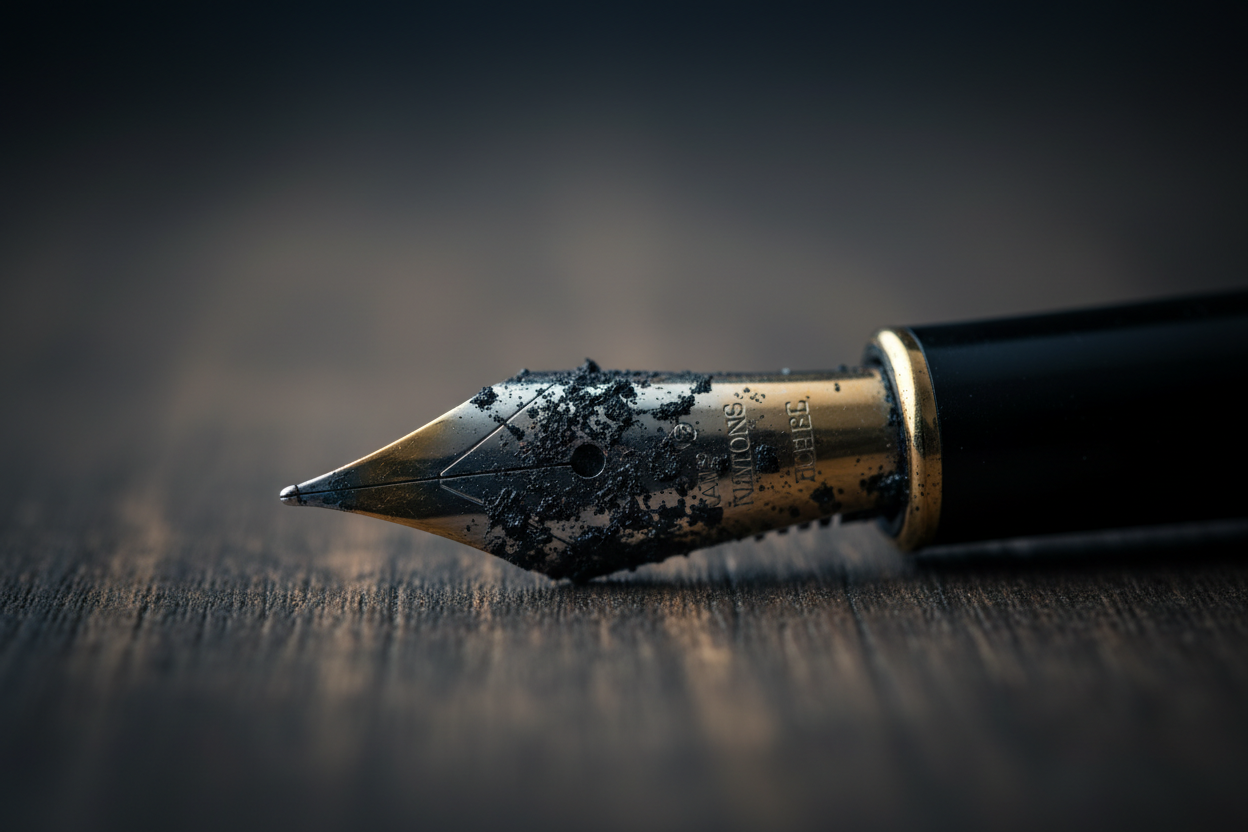
How to Clean a Fountain Pen: The Foolproof Maintenance Guide
Owning a fine fountain pen is a lot like owning a classic mechanical watch or a high-quality espresso machine. It is a precision tool engineered to perform beautifully, but it does require a tiny bit of routine upkeep to keep it running at peak performance.
If you don't clean your pen, old ink will eventually dry up inside the microscopic channels of the feed, leading to skipping, scratchiness, and frustrating "hard starts."
The good news? Cleaning a fountain pen doesn’t require a workshop full of specialized tools. It takes less than five minutes. Here is a straightforward guide on when to clean your pen and how to do it safely without damaging your writing instrument.
How Often Should You Clean a Fountain Pen?
You don't need to wash your pen every single time you refill it, but you should follow these three simple rules of thumb:
-
The Ink Change Rule: Always clean your pen if you are changing from one color or brand of ink to another. If you don't, the residual ink left in the feed will mix with the new color, resulting in muddy, unexpected shades (or worse, some inks can chemically react and create a sludge that clogs the pen).
-
The 4-to-8 Week Rule: If you consistently use the exact same ink color, aim to give your pen a quick flush every month or two just to clear out any tiny paper fibers or minor ink buildup.
-
The Hibernation Rule: If you know you aren't going to use your pen for a month or longer, never leave it inked up. Flush it completely clean and dry it before storing it away.
The Step-by-Step Cleaning Process
To clean an everyday fountain pen, all you need is room-temperature water, a small cup, and a soft paper towel or cloth.
Crucial Warning: Never use hot or boiling water, rubbing alcohol, or harsh household glass cleaners (like Windex) to clean your pen. Hot water can warp the precision plastic feeds, and alcohol can permanently dissolve or crack premium acrylics, custom resins, and delicate wood finishes.
Step 1: Disassemble the Pen
Unscrew the barrel of the pen to reveal the inner mechanism. Remove the ink cartridge or the twist converter from the grip section.
Step 2: Flush the Grip Section
Hold the grip section (with the metal nib still attached) under a gentle stream of tap water. Let the water run through the back of the section and flow out through the nib until the water starts running mostly clear.
Step 3: Use the Converter as a Pump
If you use a refillable twist converter, submerge the open tip of the converter into a cup of clean water. Twist the plunger up and down repeatedly to draw water in and push it back out. Repeat this until the water inside the converter is perfectly crystal clear.
Pro-Tip: You can also attach the empty converter back onto the grip section, submerge the nib into the clean water, and twist the converter to pump water back and forth directly through the feed. This is the absolute fastest way to clear out stubborn ink particles.
Step 4: Let It Dry completely
Once everything runs clear, gently wrap the nib and section in a piece of soft paper towel and place it nib-down in a small glass. The paper towel will naturally act like a wick, pulling any remaining water out of the internal feed channels. Let it air dry completely overnight before refilling it with fresh ink.
Dealing with Stubborn Clogs: Pen Flush Recipe
If you accidentally left a pen sitting in a drawer filled with ink for a year, plain water might not be enough to break up the crust. In this case, you can create a gentle, DIY pen cleaning solution:
-
Mix 9 parts room-temperature water with 1 part household ammonia.
-
Add a single drop of mild dish soap (like Dawn).
Flush this mixture through the pen a few times, let the section soak in it for an hour, and then flush thoroughly with clean water afterward. This safe, alkaline solution breaks down dried ink like magic.
Frequently Asked Questions (People Also Ask)
Do I need to remove the nib and feed to clean it?
For routine cleaning, no. Constantly pulling the metal nib and plastic feed out of the housing friction-fit can wear down the tolerances over time, potentially causing leaks later on. Only deep-clean or pull a nib apart if you are dealing with an extreme clog that a standard flush won't fix.
Can I clean a wood fountain pen the same way?
You can flush the internal mechanism and the metal nib exactly the same way. However, you must be careful not to submerge the actual wooden body or cap under water. Simply wipe down the exterior of a wood pen with a damp cloth and dry it immediately to protect the natural grain finish.
Why is my pen writing very faint after cleaning it?
If your ink looks watery or light after cleaning, there is still a bit of residual rinse water trapped inside the plastic feed. To fix this, simply touch the tip of the nib to a paper towel for a few seconds to draw out the excess water, and your ink will quickly return to its full, rich saturation.
Heirloom Quality from Springfield Pens
Part of the beauty of a custom writing instrument is that it is built to be a lifelong companion. At Springfield Pens in New Westminster, we design our bespoke fountain pens to be incredibly easy to maintain. By utilizing standard, high-quality international threading and robust components, cleaning your pen is a seamless, stress-free ritual.
Invest in a writing tool that is designed to stand the test of time, look spectacular on your desk, and deliver a flawless writing experience for decades to come.
Share:
Flying with Fountain Pens: How to Avoid Airplane Leaks
Bespoke vs. Kit Pens: What’s the Real Difference?