
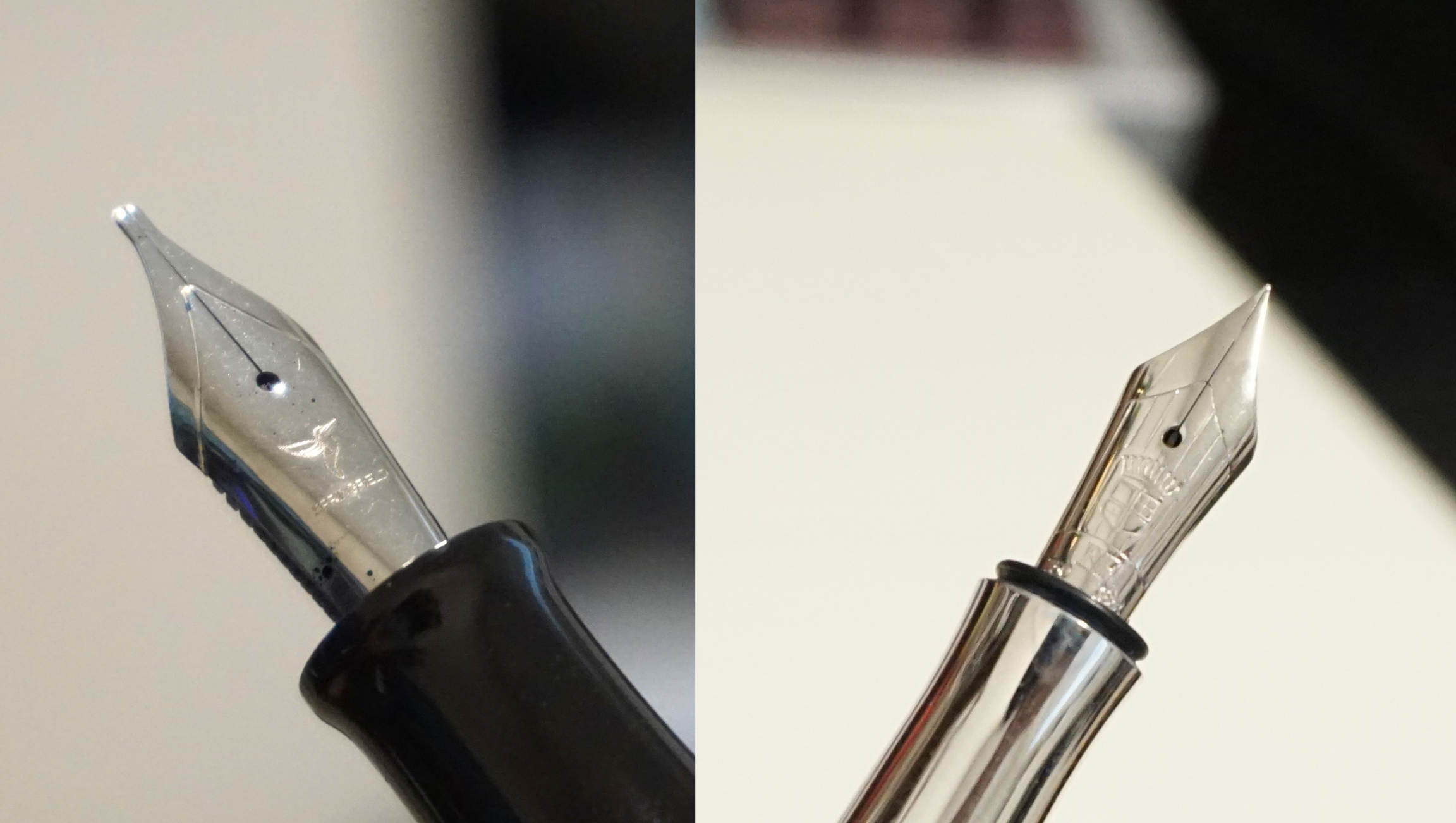
Gold vs. Steel Nibs: Is the Upgrade Actually Worth It?
If you are looking to invest in a fine writing instrument, you will quickly hit a major fork in the road: choosing between a stainless steel nib and a gold nib.
For decades, gold has been marketed as the gold standard—literally—of the fountain pen universe. It carries an air of luxury, prestige, and old-world sophistication. But it also carries a significantly higher price tag.
This leaves many writers wondering: Is a gold nib actually better than a steel nib, or is it just hype? Will it actually make my handwriting smoother?
The truth is a bit more nuanced than "gold is better." Let’s pull back the curtain on pen engineering to look at how these materials actually perform on paper so you can decide which one belongs on your desk.
The Case for Stainless Steel: The Modern Workhorse
Gone are the days when steel nibs were scratchy, stiff, and prone to rusting. Modern metallurgy and precision manufacturing have turned high-quality stainless steel nibs into absolute powerhouses.
Rigid Consistency
Stainless steel is a firm metal. Because it doesn't bend or flex easily under pressure, it offers incredible consistency. No matter how hard or soft you press, your line width will remain exactly the same. This makes steel nibs perfect for quick note-taking, daily office work, and sketching.
Durability and Ease of Use
Steel can handle a beating. If you lend your pen to a colleague who presses down too hard, a steel nib is highly likely to survive without bending out of shape. Furthermore, modern steel nibs from world-class manufacturers (like German-engineered JoWo nibs) are tipped with iridium or other hard alloys, meaning they can be tuned to write just as glassy-smooth as a pen costing five times as much.
The Case for Gold: The Cushioned, Premium Ritual
So, if steel is so good, why do people still pay a premium for 14k or 18k gold nibs? It comes down to chemistry and tactile feedback.
Elasticity and "Bounce"
Gold is inherently a much softer, more malleable metal than steel. When you write with a gold nib, the tines have a natural "give" or elasticity. It acts like a shock absorber for your hand. This creates a cushioned, bouncy, and highly expressive writing experience that absorbs the micro-vibrations of the paper. Over time, a gold nib will subtly adapt to your specific writing angle and pressure.
Complete Corrosion Resistance
Fountain pen inks can be chemically complex—some are highly acidic, others are deeply alkaline. While modern stainless steel resists rust incredibly well, gold is fundamentally inert. It will never corrode, tarnish, or degrade, no matter what vintage, iron-gall, or shimmering ink you leave sitting inside the pen for months.
Steel vs. Gold: The Performance Breakdown
| Feature | Stainless Steel Nibs | Gold Nibs (14k or 18k) |
| Writing Feel | Firm, precise, highly consistent | Soft, springy, cushioned "bounce" |
| Durability | Extremely rigid; tolerates heavy hand pressure | Malleable; requires a lighter, more mindful touch |
| Corrosion Resistance | Very high (excellent for modern inks) | Absolute (impervious to all ink chemistries) |
| Price Point | Budget-friendly and accessible | Premium (reflects market cost of precious metals) |
Myth Busting: Does Gold Mean Sweeter Performance?
Let’s clear up the biggest misconception in the stationery world: A gold nib is not automatically smoother than a steel nib. When you write, the gold or steel of the nib doesn't actually touch the paper. The part making contact is a tiny sphere of hard tipping material welded to the point. A master pen artisan can polish and tune a steel tip to be incredibly smooth, just as a poorly tuned gold nib can feel scratchy.
Gold doesn't grant smoothness; it grants springiness and warmth.
The Verdict: Which One Should You Choose?
-
Stick with Steel if: You want a reliable, ultra-consistent daily writer, you tend to write with a heavy hand, or you want the absolute best performance-to-value ratio without worrying about a precious metal premium.
-
Upgrade to Gold if: You write for hours at a time and want to minimize hand fatigue, you appreciate line variation and expressiveness in your script, or you simply want to experience the peak tactile luxury of a traditional heirloom writing instrument.
Frequently Asked Questions (People Also Ask)
Can a left-handed writer use a gold nib?
Absolutely. Left-handed writers often push the pen across the page rather than pulling it, which can cause flexible nibs to dig into the paper. However, a standard fine or medium gold nib provides a lovely, cushioned dampening effect that many lefties find incredibly comfortable.
Why are 14k or 18k gold used instead of 24k gold?
24k gold is pure gold, which is far too soft to hold its shape under the pressure of writing. By alloying the gold to 14k or 18k, metallurgists create a material that retains the perfect balance of flexibility and spring back without permanently bending out of shape.
Can I swap a steel nib for a gold nib later?
On many bespoke and custom fountain pens that use standardized housing units (such as a standard #6 thread), swapping the nib is incredibly simple. You can start your journey with a dependable steel nib and easily upgrade the core mechanism to a gold unit down the road.
Experience True Craftsmanship at Springfield Pens
At Springfield Pens, we believe the heart of a custom pen is how it connects your hand to the page. That’s why we meticulously assemble and test our bespoke writing instruments using premium, world-renowned German nibs.
Whether you love the rock-solid reliability of our hand-tuned stainless steel options or want to upgrade your piece to the ultimate luxury of a springy gold nib, we turn every pen to order right here in New Westminster. Discover a writing tool crafted just for you.
Share:
Wood vs. Resin Fountain Pens: How to Choose the Perfect Material
Fountain Pen Skipping? How to Fix Ink Flow & Hard Starts