
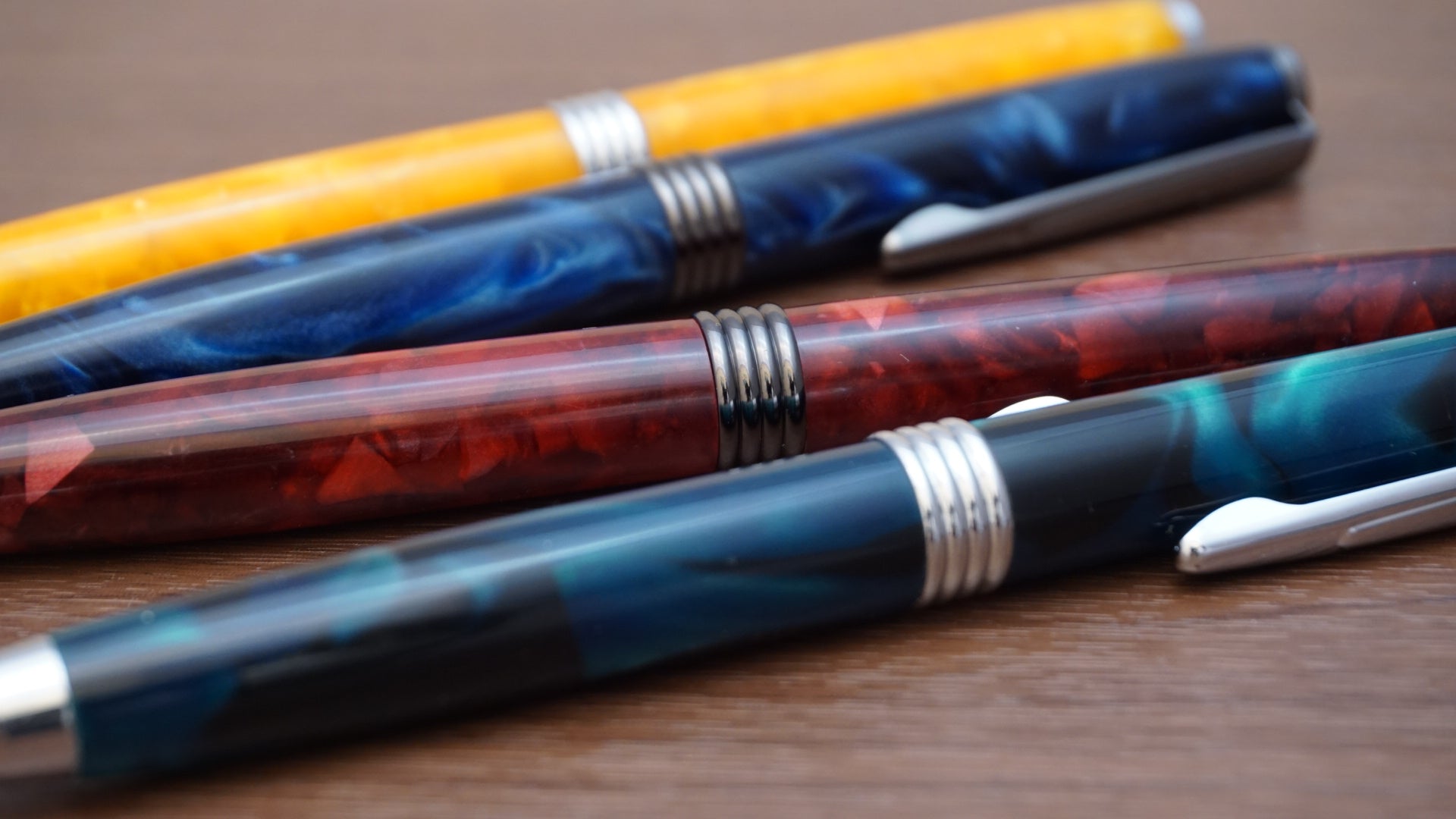
Bespoke vs. Kit Pens: What’s the Real Difference?
When browsing for a unique, handmade writing instrument, you will frequently see two terms tossed around by makers and collectors alike: Kit Pens and Bespoke (or Kitless) Pens.
To the untrained eye, both styles look like beautiful, handcrafted pens that far exceed anything you could buy in a standard office supply aisle. They both feature gorgeous materials turned on a lathe, polished to a high sheen, and fitted with a fountain or rollerball tip.
However, beneath the surface, these two types of pens belong to entirely different worlds of engineering, quality, and long-term value.
If you are looking to invest in a premium writing instrument, understanding the difference between a component kit pen and a true bespoke masterpiece is essential. Let's pull back the curtain on the workshop lathe to see how they truly compare.
What is a Kit Pen? (The Component Assembly)
To understand a kit pen, think of it like building a model airplane or assembling flat-pack furniture.

A "kit" is a pre-manufactured package of metal components sold by woodworking supply companies. The kit includes a standard metal clip, a cap band, a grip section, a pre-made internal brass tube, and a basic factory nib.
-
The Maker's Role: The pen turner’s job with a kit pen is strictly to drill a hole through a piece of wood or resin, glue the metal brass tube inside, turn the exterior shape on a lathe to match the pre-set diameters of the metal components, and press the factory parts together.
-
The Limitation: The overall size, weight, balance, and mechanical design of the pen are entirely pre-determined by a mass-producing factory. The artisan has zero control over how the cap threads together or how the clip attaches.
What is a Bespoke (Kitless) Pen? (Pure Benchwork Engineering)
A bespoke pen—often referred to in the community as a "kitless" pen—is designed and engineered entirely from scratch out of raw bars of material.

When an artisan makes a bespoke pen, they do not buy a box of pre-made metal parts. Instead, they start with a solid rod of premium exotic wood or solid ebonite and acrylic resins.
-
The Maker's Role: Every single millimeter of a bespoke pen is custom-engineered. The artisan uses precision taps and dies to cut the threads directly into the resin or wood body. They design the exact taper of the grip section, determine the perfect center of gravity for the writer's hand, and meticulously fashion custom caps and finials.
-
The Freedom: Because there are no factory restrictions, a bespoke pen is a completely unique work of art. The artisan can shape the pen to perfectly fit a specific hand size, choose specialized high-performance feeds, and offer a level of seamless design uniformity that a factory kit simply cannot achieve.
Head-to-Head: Kit Pens vs. Bespoke Writing Instruments
Why Collectors Pay a Premium for Bespoke
The primary reason serious fountain pen enthusiasts lean toward bespoke kitless pens comes down to ergonomics and mechanical integrity.
Many component kit pens rely on heavy metal internal tubes that can make the pen feel unbalanced or fatiguing during long writing sessions. Furthermore, kit pens often feature generic metal threads that can wear down or cross-thread easily over time.
A custom bespoke pen features custom-cut, multi-start threads. This means the cap smoothly glides open or closed with just one or two effortless turns, feeling incredibly soft and secure. Because the body is machined directly out of high-grade resins or stabilized woods without heavy interior metal sleeves, the pen remains shockingly lightweight, warm to the touch, and effortlessly balanced.
Frequently Asked Questions (People Also Ask)
Are kit pens bad quality?
Not at all. High-end component kits can make fantastic, durable, and highly attractive everyday writers, especially for ballpoints or rollerballs. However, they lack the unique engineering, balance, and collectibility of a custom kitless pen.
What does "kitless" mean in pen turning?
"Kitless" simply means the pen artisan did not use a commercial parts kit to make the pen. Instead, they individually machined the threads, grip sections, and bodies directly from raw materials using advanced lathe techniques.
How can you tell if a pen is a kit pen or bespoke?
The easiest giveaway is the threads and the section. If the threads are metal and look identical to dozens of other pens online, or if the step down from the barrel to the grip feels sharp and abrupt to accommodate pre-set factory rings, it is likely a kit pen. Bespoke pens feature smooth, sweeping transitions and custom material threads.
Experience the Bespoke Difference at Springfield Pens
There is a distinct magic in writing with an instrument that was engineered specifically for the human hand, rather than assembled from a factory blueprint.
At Springfield Pens in New Westminster, we take pride in the meticulous art of custom pen making. We choose to bypass generic kits to design and turn true bespoke, kitless fountain pens that celebrate the natural beauty of exotic woods and the mesmerizing depths of premium resins. Elevate your desk with a piece of functional art engineered to last for generations.
Share:
How to Clean a Fountain Pen: The Foolproof Maintenance Guide
What is a Kitless Fountain Pen? (Inside Artisan Pen Making)