
What is a Kitless Fountain Pen? (Inside Artisan Pen Making)

In the fine writing community, the term "handmade" can mean a lot of different things. To some, it means assembling mass-produced factory parts inside a turned wooden sleeve. To a dedicated pen artisan, however, true handcraftsmanship means something entirely different: the kitless fountain pen.
If you have ever scrolled through artisan pen forums or high-end maker catalogs, you have likely run across this term.
But what actually is a kitless fountain pen? How is it made, and why does it represent the absolute pinnacle of custom benchwork pen making? Let’s step inside the studio, turn on the lathe, and look at the intricate engineering that goes into creating these bespoke writing instruments.
Defining the Craft: From Raw Rod to Writing Instrument

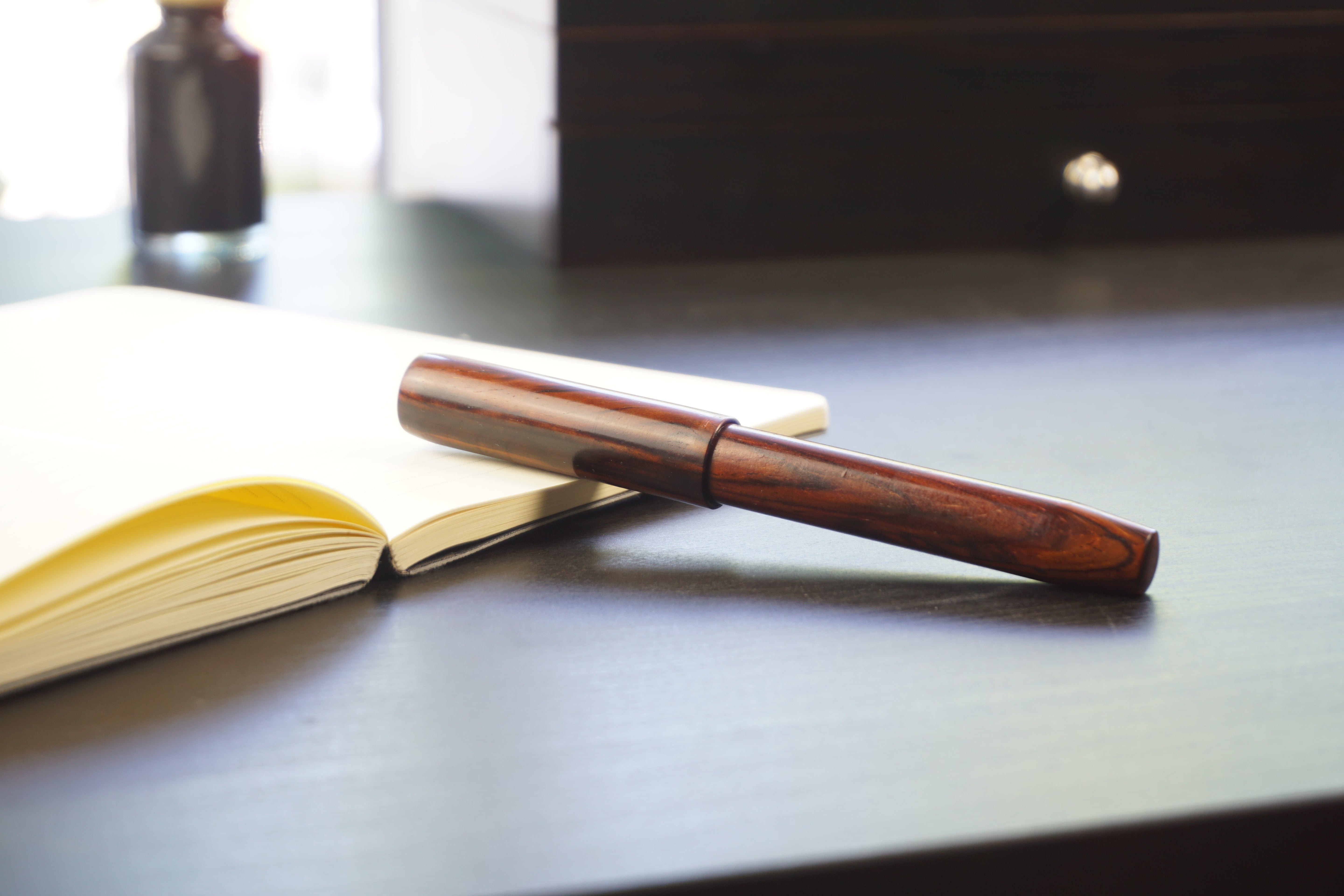
At its core, a kitless fountain pen is a pen engineered completely from scratch out of raw, solid bars of material—typically premium polyurethane resins, ebonite, or stabilized exotic woods.
Unlike standard hobbyist pens, a kitless pen uses absolutely zero pre-assembled commercial components. Aside from the German-engineered nib unit and the ink converter inside, every single millimeter of the pen’s structure is manually shaped, drilled, tapped, and threaded by the maker.
The Step-by-Step Anatomy of a Kitless Build
Creating a kitless pen is an exercise in extreme precision. A single mistake measured in thousandths of an inch can ruin hours of work and cause a pen cap to sit crooked or leak. Here is how the process works on the artisan’s bench:
1. Material Selection and Preparation

The journey begins with solid rods of material. The artisan cuts these rods into specific lengths for the three major sections of the pen: the cap, the barrel, and the grip section.
2. Machining the Grip Section

The grip section is the most critical part of the pen for writer comfort. The artisan mounts the material on a lathe, drills a precise internal chamber, and uses a specialized tap to cut the threads that will hold the screw-in nib housing unit. The exterior is then meticulously tapered to create an ergonomic, fatigue-free grip for the fingers.
3. Precision Internal and External Threading

This is where true kitless pen making separates itself from basic assembly. Using specialized triple-start taps and dies, the artisan manually cuts matching threads onto the exterior of the grip section, the inside of the cap, and the opening of the barrel.
These "multi-start" threads are a hallmark of luxury pens. They ensure that the cap aligns perfectly every single time and closes securely with just one or one-and-a-half smooth turns.
4. Shaping and Profiling the Body

With the internal mechanics and threads perfectly matched, the pieces are screwed together and mounted back onto the lathe. The artisan uses sharp chisels and hand tools to turn the final silhouette of the pen—crafting seamless transitions from the cap to the barrel, shaping the finials (the ends of the pen), and ensuring there are no sharp, uncomfortable steps where the cap meets the body.
5. The Multi-Stage Polish

Raw resin and wood come off the lathe looking dull and scratched. To achieve that signature glass-like, deep-gloss finish, the pen undergoes a rigorous polishing cycle. It is wet-sanded through up to nine different grades of Micro-Mesh abrasive pads, followed by a final buffing compound session to bring out the material's hidden depth and shimmer.
6. Adding the Final Touches and Branding

Once the individual components are perfectly shaped and polished, the pen enters the assembly phase where it receives its true identity. For a custom maker, branding isn't slapped on a box—it is seamlessly engineered into the physical architecture of the writing instrument.
-
The Finial Coin: The signature branding mark is embedded directly into the end of the cap. A custom, precision-crafted Springfield coin is permanently inset into the cap finial, acting as a proud stamp of authentic benchwork quality.
-
The Clip Assembly: Depending on the specific design layout, the functional pocket clip is carefully aligned and integrated into the cap structure during this phase, ensuring it offers the perfect balance of tension and elegant security without disrupting the pen's profile.
7. The Final Quality Inspection
Before any bespoke fountain pen is listed on the website for sale, it undergoes a meticulous bench inspection. It isn't enough for the pen to simply look beautiful; it must perform flawlessly.
The artisan closely examines the custom-cut threads under magnification, checks the seamless alignment of the cap to the barrel, and wet-tests the feeding mechanism to ensure the ink flow is perfectly balanced. Only when the pen passes this exhaustive multi-point checklist is it photographed, cataloged, and uploaded to the online store—ready to be shipped to a collector's desk.
Why Choose a Kitless Fountain Pen?
When you hold a kitless pen, the structural differences are immediately obvious to your hand:
-
Flawless Balance: Because the pen isn't built around heavy factory brass sleeves, it is exceptionally lightweight and perfectly balanced. The center of gravity stays low, right where it belongs.
-
Infinite Customization: The artisan has complete control over the dimensions. Want a slightly thicker grip section to prevent hand cramping? A longer barrel for larger hands? A custom roll-stop instead of a traditional clip? A kitless design allows for it all.
-
Seamless Aesthetics: The patterns in custom-poured artisan resins or premium burls flow gracefully across the entire length of the pen. There are no awkward chrome bands or mismatched factory parts to break up the visual harmony.
Frequently Asked Questions (People Also Ask)
Why are kitless pens more expensive than kit pens?
A kit pen can often be assembled in under an hour using pre-made parts. A true kitless pen requires specialized engineering skills, dedicated precision threading tools, and anywhere from 4 to 8 hours of focused benchwork labor for a single piece. You are paying for authentic engineering, not assembly.
Can a kitless pen use standard ink cartridges?
Yes. Most bespoke kitless pen makers engineer their barrels to accept standard international ink cartridges or standard twist converters, ensuring you have access to thousands of incredible boutique ink colors from around the world.
What materials are best for a kitless pen?
High-grade polyurethane resins (like DiamondCast) are incredibly popular because they cut cleanly, hold sharp threads, and offer spectacular shimmer. Ebonite (a hard vulcanized rubber) is a traditional collector favorite for its warm feel, while stabilized burls offer unmatched organic beauty.
The Benchwork Tradition at Springfield Pens
A great fountain pen shouldn't just look pretty on a desk—it should feel like an extension of your own hand.
At Springfield Pens in New Westminster, we design and turn every single one of our bespoke fountain pens using strict kitless, benchwork methods. From cutting our own multi-start threads to hand-polishing every custom resin and exotic wood barrel, we ensure that your writing tool is a completely unique piece of engineering designed to bring joy to every single word you write.
Share:
Bespoke vs. Kit Pens: What’s the Real Difference?
Fountain Pen Nib Sizes Explained: What Do the Letters Mean?