
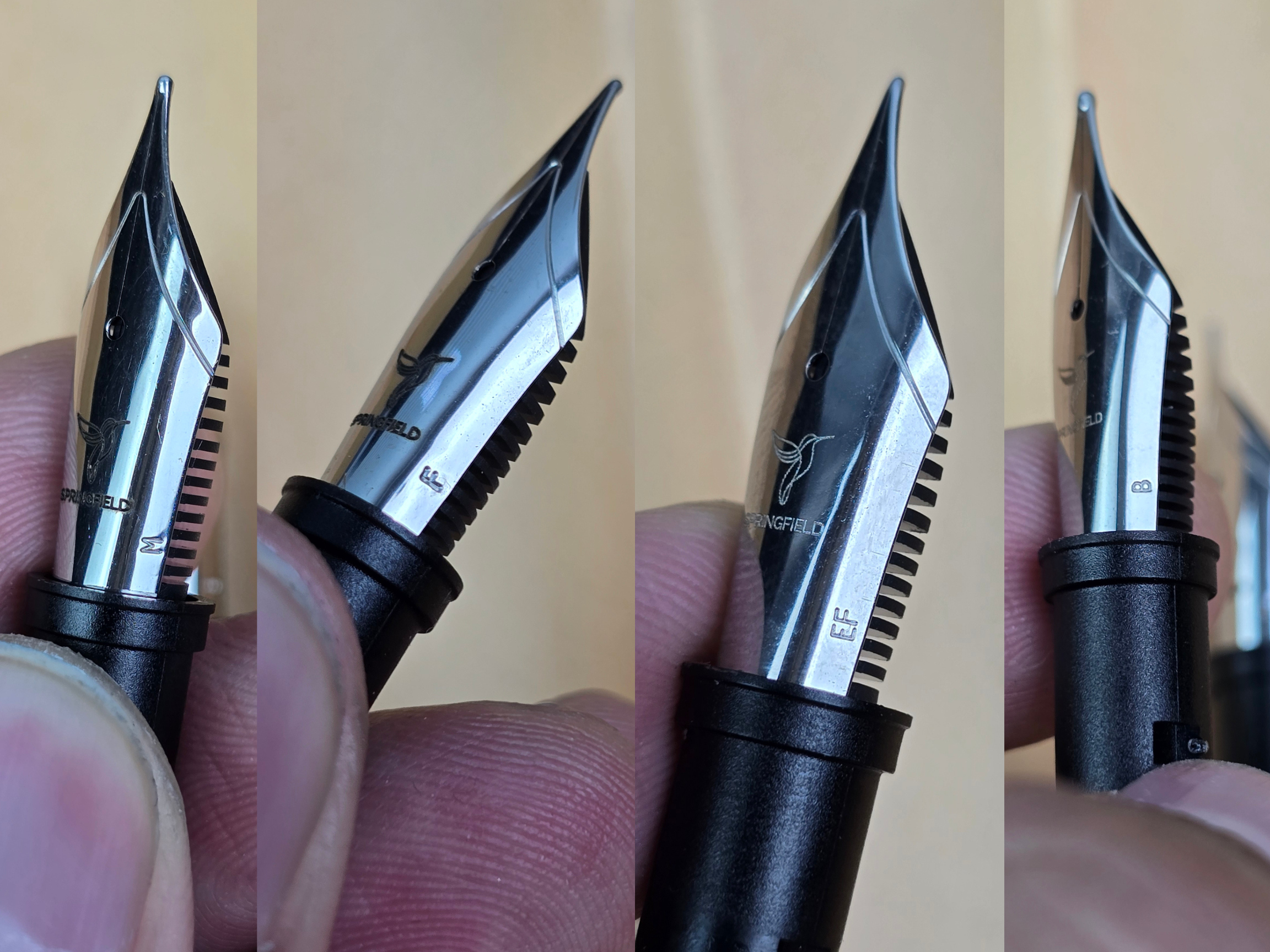
Fountain Pen Nib Sizes Explained: What Do the Letters Mean?
When you buy a standard ballpoint or gel pen at the store, you usually look for a number on the pack—like 0.5mm or 0.7mm—to tell you how thick the line will be. But when you step into the world of premium fountain pens, those numbers disappear. Instead, you are confronted with a series of letters stamped right onto the metal of the nib: EF, F, M, and B.
If you are new to fine writing instruments, trying to figure out which letter matches your handwriting can feel a bit like decoding a secret language.
Choosing the right nib size is the single most important factor in how your pen feels on paper. Let’s break down exactly what these letters mean, how they alter your writing experience, and how to pick the absolute perfect size for your desk.
Decoding the Letters: The Core Four Nib Sizes
The letters stamped onto a fountain pen nib stand for traditional sizing terms. Here is what they mean from thinnest to thickest:
EF – Extra Fine (~0.3mm to 0.4mm)
The Extra Fine nib grinds the tipping material down to a very sharp, delicate point. It produces a razor-thin, highly precise line.
-
Best For: Writers with incredibly small, tight handwriting, or those who do detailed sketching and cross-hatching. Because it lays down very little ink, it is also the best choice if you frequently write on cheap, absorbent paper (like standard office copy paper), as it minimizes ink bleeding.
F – Fine (~0.4mm to 0.5mm)
The Fine nib is the most popular starting point for beginners. It mimics the familiar line width of a standard 0.5mm gel pen or a sharp wooden pencil.
-
Best For: Everyday note-taking, journaling, and general office work. It provides a perfect balance between a crisp, legible line and a smooth writing experience.
M – Medium (~0.6mm to 0.7mm)
As the name suggests, the Medium nib sits right in the sweet spot. Because the tipping point is rounder and larger, it glides across the page with noticeably less friction than a Fine nib, offering a lush, "glassy-smooth" sensation.
-
Best For: People with average-to-large handwriting who want to experience that effortless, fluid fountain pen gliding feel. It lays down enough ink to let the true color and shading of your ink shine on the page.
B – Broad (~0.8mm to 1.0mm)
The Broad nib features a large, robust sphere of tipping material that lays down a thick, juicy ribbon of ink.
-
Best For: Large, expressive cursive, signing important documents, or testing out specialty boutique inks. If you love inks that feature dramatic color transitions (shading) or metallic particles (shimmer), a Broad nib is essential to show them off.
The Twist: Western vs. Japanese Sizing
There is one critical rule every fountain pen collector needs to know before adding a pen to their cart: Not all Fine nibs are created equal. Sizing generally splits into two major categories depending on where the nib was manufactured:

-
Western Nibs (European/American): Brands that source German-engineered nibs (like JoWo or Bock) tend to favor a wider, wetter line standard. A Western Fine writes like a true, bold fine line.
-
Japanese Nibs: Brands manufactured in Japan (like Pilot, Sailor, or Platinum) engineer their nibs for intricate, character-based kanji script. Because of this, Japanese nibs run a full size thinner than Western nibs. A Japanese Medium often writes like a Western Fine.
How to Choose the Perfect Match for Your Hand
If you aren't sure which direction to lean, ask yourself these two quick questions:
-
How large is your handwriting? If your letters are small and close together, a Medium or Broad nib will likely turn your "e's" and "o's" into solid blobs of ink. Stick to an Extra Fine or Fine. If you write with big, sweeping loops, a Broad nib will make your script look magnificent.
-
What kind of paper do you use? If you use premium, ink-friendly journals, a Medium or Broad nib will feel luxurious. If you are using standard, inexpensive notebook paper at work or school, an Extra Fine or Fine will keep your ink from soaking through to the next page.
Frequently Asked Questions (People Also Ask)
Do different nib sizes change how smooth a pen feels?
Yes. As a general rule, the broader the nib, the smoother it will feel. Extra Fine and Fine nibs have less surface area touching the page, meaning you will feel a bit more tactile "feedback" from the texture of the paper. Broad and Medium nibs glide on a cushion of ink, feeling exceptionally smooth.
What is a Stub or Italic nib?
Unlike standard round nibs, a Stub nib is ground flat like a chisel. It creates thick vertical lines and very thin horizontal lines, automatically giving your everyday handwriting an elegant, calligraphy-style flair without requiring any special hand pressure.
Can you change your mind and swap a nib size later?
On many custom and high-quality bespoke pens that utilize standardized screw-in nib units, swapping your nib size is incredibly easy. You can unscrew a Fine unit and replace it with a Medium unit in under thirty seconds without needing to buy an entirely new pen.
Precision Tuned Writing at Springfield Pens
A premium pen should adapt to your hand, not the other way around. At Springfield Pens in New Westminster, we carefully assemble our bespoke wood and resin writing instruments using world-renowned, German-engineered nib units.
Whether you prefer the crisp, immaculate precision of an Extra Fine or the buttery-smooth luxury of a juicy Broad, we inspect, align, and hand-test every single nib before it leaves our studio to guarantee a flawless writing experience from your very first word.
Share:
What is a Kitless Fountain Pen? (Inside Artisan Pen Making)
Converter vs. Cartridge: Which Fountain Pen Ink System is Better?