
Why Are Fountain Pens So Expensive? (Inside the Mind of an Artisan)

For anyone accustomed to buying a pack of disposable plastic gel pens for a few dollars, looking at the price tag of a premium, bespoke fountain pen can cause a bit of sticker shock.
It is a valid question: Why are fountain pens so expensive? What are you actually paying for?
The short answer is that you aren't just paying for an instrument that lays ink on paper. You are paying for a blend of precision micro-engineering, high-grade materials, and hours of hands-on labor.
Let’s take a look inside the workshop to break down exactly what goes into crafting a premium writing instrument, and whether a bespoke pen is truly worth the investment.
1. Mass-Produced vs. Bespoke: The Human Element
To understand the cost, you first have to understand how the pen was made.
Injection-molded plastic pens are pumped out by machines by the millions in overseas factories. They are designed to be disposable. If a part is misaligned by a fraction of a millimeter, it gets tossed into a recycling bin without a second thought.
A bespoke or artisanal fountain pen, however, is a labor of love. Every single piece—the cap, the body, the section—is individually turned on a lathe by a skilled craftsman.

-
Precision Tolerances: Threading a pen cap so that it closes smoothly and securely requires precision down to a thousandth of an inch.

-
Finishing Labor: Achieving a glass-like finish on a custom pen requires a meticulous, multi-stage sanding and polishing process. It can take hours of hand-buffing just to get a single pen to gleam under the light.
When you purchase an artisan pen, you are paying for hours of focused, specialized human craftsmanship.
2. The Cost of Exceptional Materials
You can’t make a masterpiece out of cheap materials. The components used in high-end pens are selected for their durability, weight, balance, and aesthetic uniqueness.
Exotic and Premium Woods
Many heirloom pens are turned from premium burls, curly maples, or deeply grained walnuts. Working with wood requires immense skill; the artisan must understand grain direction, stabilize the wood to prevent cracking over time, and apply finishes that protect the material while letting its natural beauty shine through.
Specialized Polyurethane Resins
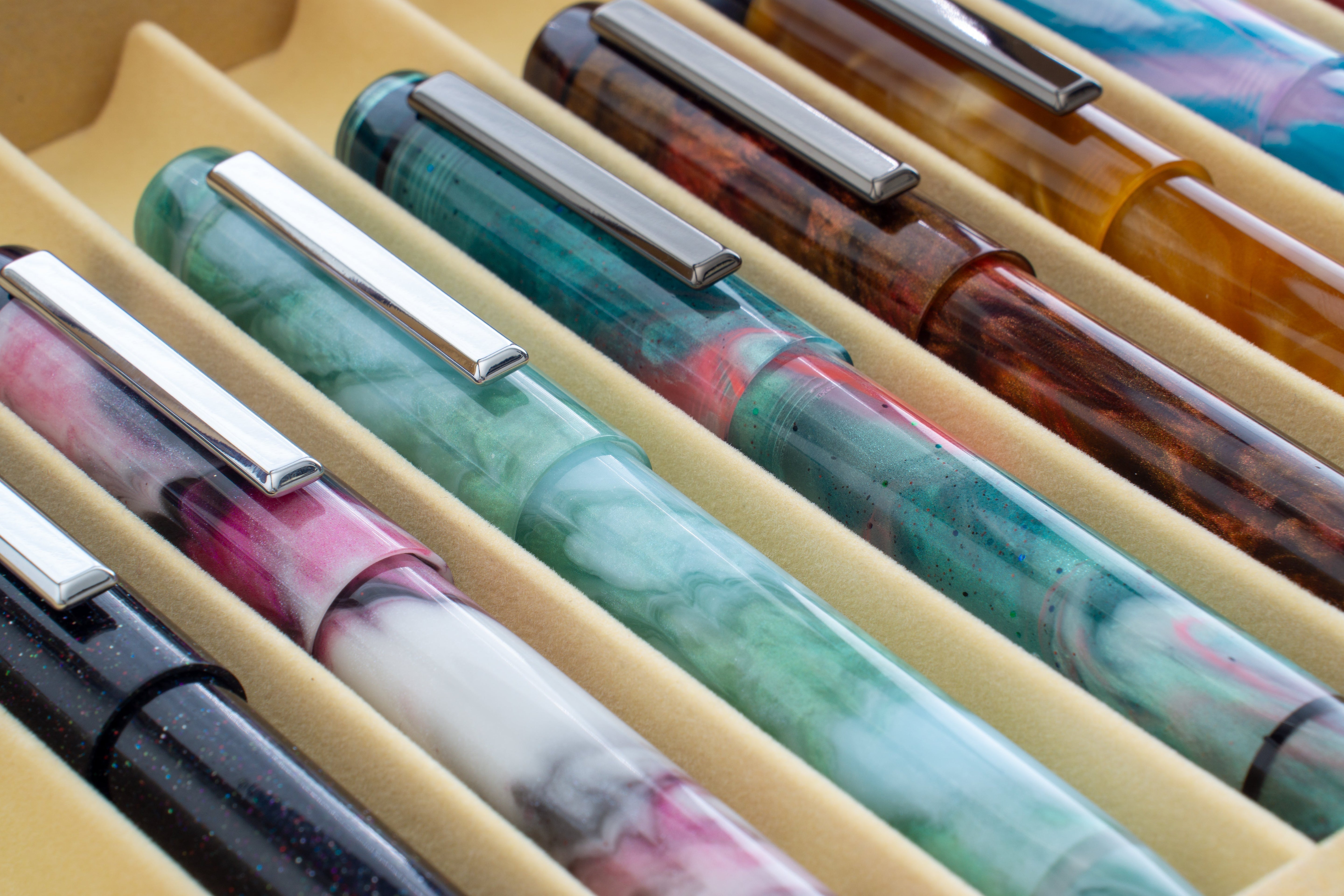
If a pen isn't made of wood, it’s likely made of a specialized resin. Premium writing instruments don't use cheap, brittle plastics. Instead, they utilize high-grade polyurethane resins (such as DiamondCast, which features real conflict-free diamond dust reclaimed from diamond cutters). These resins offer incredible depth, chatoyancy (that shimmering, light-catching effect), and a durable toughness that protects the pen from shattering if dropped.

3. The Heart of the Pen: Engineering the Nib and Feed
The nib is the absolute engine of a fountain pen. If the nib doesn't perform perfectly, the prettiest pen body in the world is useless.
A massive part of a fountain pen’s cost is tied up in the nib assembly:
-
Steel vs. Gold Nibs: High-quality stainless steel nibs offer fantastic, reliable everyday writing performance. However, premium luxury pens often use 14k or 18k gold nibs. Gold is naturally flexible, offering a softer, springier writing experience that adapts to your hand over time, but it is also an inherently expensive precious metal.
I will eventually discuss more between a steel and a gold nib, especially since the prices of gold has risen dramatically. So watch this space! -
The Feeding Mechanism: A fountain pen relies on capillary action. The ink feed must regulate air pressure and ink flow perfectly so that the pen doesn't leak when you change altitude, yet doesn't dry out when left uncapped for a minute. Balancing that fluid dynamics puzzle requires sophisticated engineering.
4. Longevity: The Ultimate Cost-Per-Use Equation
When looking at why fountain pens cost what they do, it helps to shift from looking at the upfront cost to the lifetime value.
A standard ballpoint pen is a temporary tool destined for a landfill. (Believe me, I've worked at a landfill before). A well-made fountain pen, conversely, is built to last for generations. It features a refillable ink converter or cartridge system, and because the components are robust, it can be passed down as an heirloom.

If you use a beautifully crafted, $200 handcrafted pen every single day for ten years, it costs you just pennies per day. In exchange, you get a writing experience that elevates a mundane daily task into a mindful ritual.
Frequently Asked Questions (People Also Ask)
Are expensive fountain pens actually worth it?
Yes, if you value ergonomics, craftsmanship, and sustainability. A premium pen provides a smoother writing experience that requires zero hand pressure, reducing fatigue during long writing sessions. It also serves as a distinct personal statement piece.
What is the difference between a wood and a resin pen?
Wood pens offer a warm, organic tactile feel and feature entirely unique, natural grain patterns. Polyurethane resin pens (like DiamondCast) are incredibly durable, completely resistant to ink staining, and offer vibrant, shimmering colors and depths that wood cannot match.
Do expensive fountain pens leak?
Modern, high-quality fountain pens are engineered with sophisticated feeds that regulate internal pressure. Unless a pen is subjected to extreme temperature drops or structural damage, it will not leak during daily use or travel.
Why do some pens have gold nibs?
Gold is a malleable, springy metal that yields a smoother, cushioned feel on paper. It is also completely resistant to the corrosive properties of certain fountain pen inks. However, a well-tuned premium steel nib can write just as smoothly as a gold nib for a fraction of the price.
Behind the Lathe at Springfield Pens
Every pen tells a story. At Springfield Pens, we turn raw exotic woods and shimmering resins into precision writing instruments right here in New Westminster. If you're ready to experience the difference that true benchwork craftsmanship makes, explore our latest collection of bespoke fountain pens.
Share:
Calligraphy Ink Versus Fountain Pen Ink: What's the Difference?
Wood vs. Resin Fountain Pens: How to Choose the Perfect Material